
How to Build a Creator Watchlist That Finds Better Ideas
A simple creator watchlist system for tracking competitors, adjacent creators, small testers, and breakout posts without drowning in saved videos.
 Mina Lindholm 8 min read
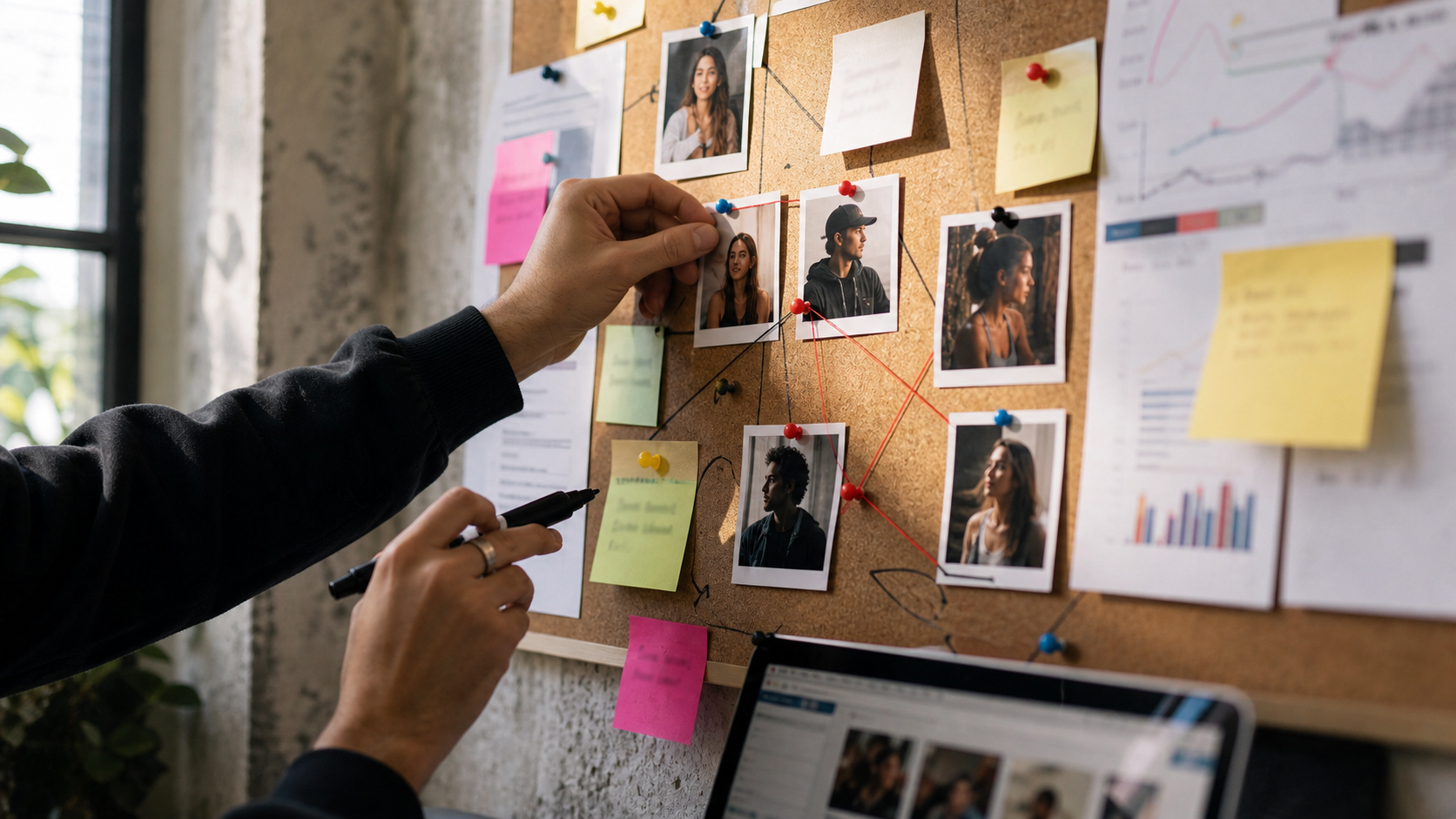
The short answer
A useful creator watchlist is small, segmented, and reviewed on a schedule. It should include direct competitors, adjacent creators, fast testers, and reference accounts that shape audience expectations.
The point is not to watch everyone. The point is to notice when a post, hook, format, or creator moves unusually fast inside the niche you care about.
Define the job of the watchlist
Before adding accounts, decide what the list is supposed to help with. Are you finding TikTok trends, Reels hooks, product demo angles, competitor moves, or creator partnership ideas?
A watchlist without a job becomes another feed. A watchlist with a job becomes a research system.
Use four account types
The best watchlists mix account types because each one teaches something different. Direct competitors show category demand. Adjacent creators show fresh angles. Small testers show early experiments. Large reference accounts show what a polished version looks like after the format is obvious.
- Direct competitors: same audience and similar offer.
- Adjacent creators: different offer, same audience problem.
- Small testers: frequent posters with rough experiments.
- Reference accounts: bigger creators that shape audience taste.
Keep it small enough to review
Start with 20 to 40 accounts per niche. If you cannot review the list weekly, it is too large.
Remove accounts that only repost, repeat old formats, or no longer influence your audience. Add accounts when they repeatedly appear in comments, collaborations, stitch chains, or saved examples.
Track outliers, not every post
Do not log every post. Log the posts that beat the creator's normal performance, create unusual comment activity, or introduce a format other creators start adapting.
A small creator getting five times their normal views is often more interesting than a giant creator getting another giant number.
Write why the post stood out
Saving a video is not research unless you write why it mattered. Was it the hook? The first frame? The proof? The editing pace? The comment question? The product angle?
This makes the idea reusable without copying the surface.
- Hook mechanism
- Visual setup
- Audience problem
- Proof or example
- Comment demand
- Share or save trigger
Make a weekly brief
A weekly brief should be short: what moved, why it moved, and what you will test. If it reads like a report nobody wants to open, it is too long.
Use PandaTrends to keep the watchlist and spot breakout movement, then add your human read: what the pattern means for your audience.
Turn watchlist signals into posts
A watchlist is only useful if it changes what you publish. End each review with one or two tests.
For example: adapt a competitor's comparison format to a different audience, answer a repeated comment question, test a stronger first frame, or turn an adjacent creator's angle into your category.